




Why choose a centerline butterfly valve for zero-leak flow?
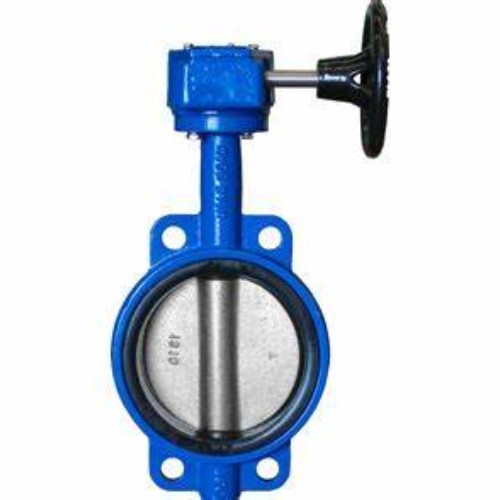
D371X-10 Wafer Centerline Butterfly Valve with Turbine: a field-tested look
If you’ve ever swapped a stubborn gate valve at 2 a.m., you’ll understand why many water teams quietly prefer the centerline butterfly valve. Compact, forgiving on alignment, and—when geared—surprisingly easy to operate. The D371X-10 wafer model I’ve followed from the shop floor in Baoding to the pump room is a practical example.
What’s trending and why it matters
Utilities and HVAC contractors keep telling me the same thing: fewer parts, faster turnarounds. The centerline butterfly valve ticks both boxes. Current purchasing trends lean toward wafer bodies (lighter, cheaper shipping), gear operators for DN≥200, and coatings that handle slightly aggressive water. To be honest, nobody wants drama when the line is down.
Product snapshot
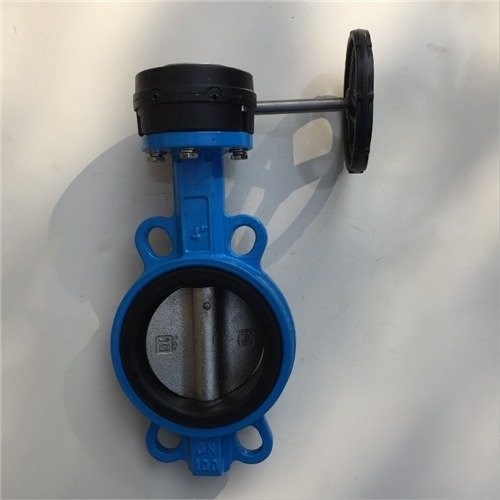
Made in North Guzhuangying Village, Ansu Town, Xushui District, Baoding, Hebei, China, this turbine-operated wafer valve targets clean water services up to 80 °C. Below is the quick spec sheet I share with project managers:
| Parameter | D371X-10 Wafer |
|---|---|
| Size | DN40–DN1000 |
| Pressure class | 1.0–1.6 MPa (PN10/PN16) |
| Medium | Water (non-corrosive) |
| Temperature | ≤ 80 °C |
| Body material | Gray cast iron / Nodular (ductile) cast iron |
| Connection | Wafer type |
| Seat options | Typically EPDM or NBR (confirm per order) |
| Operator | Manual gear (turbine) |

How it’s made and tested
Materials: cast iron or ductile iron body with a resilient seat. Methods: precision CNC machining of the stem bore, grit blast + epoxy coat (≈150–250 μm DFT, real-world use may vary), assembly in clean zones. Testing: shell and seat tests to API 598 or EN 12266-1; torque checks by size; coating adhesion per ISO 12944 systems where specified. Service life? Many customers say they see >50,000 open/close cycles on treated water, which tracks with what I’ve seen when alignment and throttling limits are respected.
Where it’s used
- Municipal water distribution and treatment basins
- HVAC chilled/condensed water loops
- Light industrial process water, mining utility lines, fire protection loops (check listing needs)
Case note: A northern city plant swapped a cluster of DN300 gate valves for centerline butterfly valve units over a 48-hour shutdown. Operators reported ≈25% lower hand torque with the gearbox and faster isolation. No leaks post hot and cold cycles, which—frankly—made maintenance breathe easier.

Why choose a centerline butterfly valve here
- Compact wafer body cuts weight and flange real estate.
- Gear operator smooths operation on DN≥200 and throttling positions.
- Resilient seat offers tight shutoff on clean water with forgiving alignment.
- Budget-friendly versus high-spec triple-offset designs you probably don’t need for water at ≤80 °C.
Vendor comparison (indicative)
| Feature | HBYS D371X-10 | Import A (generic) | Premium EU B |
|---|---|---|---|
| Pressure class | PN10/PN16 | PN10 | PN16 |
| Size range | DN40–DN1000 | DN50–DN600 | DN50–DN1200 |
| Seat options | EPDM/NBR (confirm) | EPDM | EPDM; optional WRAS |
| Gear operator | Standard on larger DN | Optional | Standard |
| Coating | Epoxy ≈150–250 μm | Epoxy ≈120 μm | Fusion bonded epoxy |
| Lead time | Short to mid (project-dependent) | Variable | Longer |
| Price band | $ | $ | $$$ |
Customization, compliance, and test notes
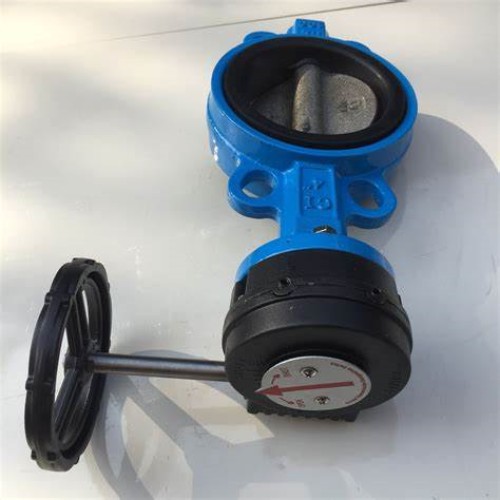
Customization: seat (EPDM/NBR), disc coatings, extended stems, locking gear, position indicators. Compliance: routinely tested to API 598 / EN 12266-1; design follows EN 593 for butterfly valves; face-to-face often per ISO 5752 short series (check DN). Typical shop data I’ve seen: shell test at 1.5× PN; seat test at 1.1× PN; torque at DN200 ≈ 80–120 N·m with EPDM seat (water-lubricated)—actual sites vary with media and aging.
Customer feedback? Installation is quick, and the gear operator gives a reassuring feel—especially when throttling gently around 30–70% open. And yes, the centerline butterfly valve remains a go-to for retrofit tight spaces.
Citations
- API 598: Valve Inspection and Testing.
- EN 593: Industrial valves — Butterfly valves.
- EN 12266-1: Industrial valves — Testing of metallic valves.
- ISO 5752: Metal valves — Face-to-face and centre-to-face dimensions.
-
Comprehensive Guide to China Pipe Laterals Fittings for Global Trade ApplicationsNewsFeb.24,2026
-
China Extended Body Gate Valves A Comprehensive Guide To Selection And ApplicationNewsFeb.11,2026
-
Comprehensive Guide to China 3 Inch Butterfly Valve Selection and ApplicationsNewsJan.30,2026
-
Comprehensive Guide to Pipe Adaptors and Fittings for Efficient SystemsNewsJan.28,2026
-
Comprehensive Guide to Pipe T Fittings for Plumbing and Fluid Transfer SystemsNewsJan.28,2026
-
Comprehensive Guide to Union Pipe Fitting Selection and ApplicationsNewsJan.27,2026
-
Comprehensive Guide to China Angle Globe Valves for Industrial ApplicationsNewsJan.27,2026
 Afrikaans
 Albanian
 Amharic
 Arabic
 Armenian
 Azerbaijani
 Basque
 Belarusian
 Bengali
 Bosnian
 Bulgarian
 Catalan
 Cebuano
 Corsican
 Croatian
 Czech
Czech
 Danish
 Dutch
Dutch
 Esperanto
 Estonian
 Finnish
 French
 Frisian
 Galician
 Georgian
 German
 Greek
Greek
 Gujarati
 Haitian Creole
 Hausa
Hausa
 Hawaiian
 Hebrew
 Hindi
Hindi
 Miao
Miao
 Hungarian
 Icelandic
 Igbo
Igbo
 Indonesian
 Irish
Irish
 Italian
 Japanese
 Javanese
 Kannada
 Kazakh
 Khmer
Khmer
 Rwandese
 Korean
 Kurdish
 Kyrgyz
 Lao
Lao
 Latin
Latin
 Latvian
 Lithuanian
 Luxembourgish
 Macedonian
 Malgashi
 Malay
Malay
 Malayalam
 Maltese
 Maori
Maori
 Marathi
 Mongolian
 Myanmar
 Nepali
 Norwegian
 Norwegian
 Occitan
 Pashto
 Persian
 Polish
 Portuguese
 Punjabi
 Romanian
 Russian
 Samoan
 Scottish Gaelic
 Serbian
 Sesotho
 Shona
Shona
 Sindhi
 Sinhala
 Slovak
 Slovenian
 Somali
 Spanish
 Sundanese
 Swahili
 Swedish
 Tagalog
 Tajik
Tajik
 Tamil
Tamil
 Tatar
Tatar
 Telugu
 Thai
Thai
 Turkish
 Turkmen
 Ukrainian
 Urdu
Urdu
 Uighur
 Uzbek
Uzbek
 Vietnamese
 Welsh
Welsh
 Bantu
Bantu
 Yiddish
 Yoruba
 Zulu
Zulu
 English