




Remote Ball Valve – Precise, Reliable, IP67 Fail-Safe
Field Notes on a Remote Ball Valve that Simply Works
If you spend any time around municipal water teams or plant utilities, you’ll hear the same refrain: keep level control reliable, keep maintenance low. That’s why the 100X Remote Ball Cock from Baoding (yes, the one made in North Guzhuangying Village, Ansu Town, Xushui District, Baoding City, Hebei, China) keeps popping up in my notes. It’s designed for water and clear water, and—surprisingly to some—this “remote ball cock” is a control valve rig that uses a remote float mechanism to open/close the main valve. Not flashy, but it does the job.
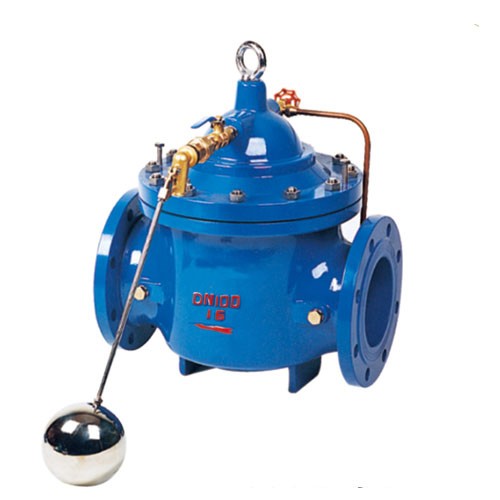
Quick Spec Snapshot
| Model | 100X Remote Ball Cock |
| Medium / Temp | Water, clear water / ≤80 ℃ |
| Size Range | DN32–DN600 |
| Pressure Rating | PN10–PN25 (1.0–2.5 MPa) |
| Body / Ends | Cast iron body, flanged ends (ASME B16.5 / GB≈) |
Where it fits (and why ops teams like it)
- Municipal reservoirs and elevated tanks—automatic fill via remote float control.
- Building services—domestic water break tanks, cooling tower makeup.
- Irrigation districts—steady level without babysitting a pump.
Many customers say the install is “set and forget.” To be honest, that’s rare praise in level control. The forged pilot/float assembly and the main valve (diaphragm-actuated body) give stable modulation rather than on/off shock—good news for aging pipes.
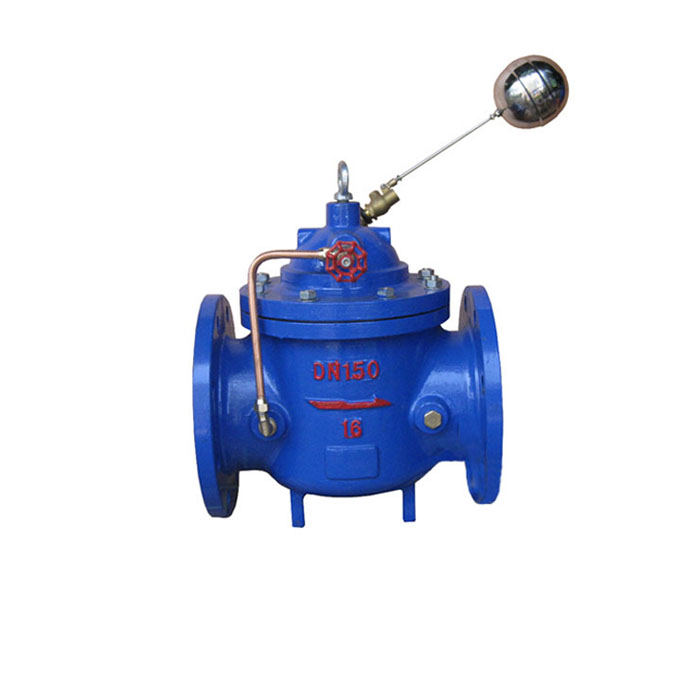
Process, testing, and real-world durability
Materials and methods:
- Body: cast iron; internal trim in brass/SS where specified; diaphragm elastomer selected for potable water.
- Machining tolerances kept tight around seat/plug; epoxy coating inside/out per AWWA C550≈ (DFT ≈ 200–300 μm, real-world may vary).
Testing standards (typical for this class):
- Hydrostatic shell: 1.5× PN per ISO 5208 / GB/T 13927.
- Seat test: 1.1× PN, leakage Rate A (no visible leakage) per ISO 5208.
- Functional modulation and pilot responsiveness bench-checked; cycle test samples ≈ 50,000 cycles.
Service life: in treated water and with routine inspection, ≈ 15–25 years is common for cast-iron control valves (I guess your mileage may vary with sand and pressure spikes).
Advantages I’ve observed
- Stable level control without electric power at the valve—useful in remote tanks.
- Low water hammer; gradual closing profile.
- Straightforward maintenance; spares are inexpensive compared to motorized options.
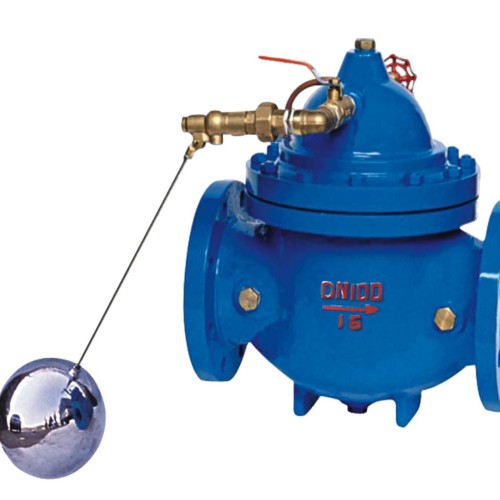
Vendor landscape (quick look)
| Vendor | Design focus | Rating | Certs/Notes |
|---|---|---|---|
| HBYS (Baoding, China) | 100X remote float control, DN32–600 | PN10–25 | ISO 9001; epoxy per AWWA C550≈ |
| Local OEM A | Smaller sizes (DN32–200) | PN10–16 | Basic hydro tests; short lead times |
| Global Brand B | Premium trim, NSF options | PN16–25 | Broader approvals; higher cost |
Customization and documentation
Options I’ve seen: stainless trim for mildly aggressive water, alternate diaphragm compounds, pilot sensitivity tuning, and non-rising stem indicators. Flanges typically follow ASME B16.5 or GB standards. Ask for ISO 9001 certs and pressure test reports per ISO 5208/API 598.
Mini case notes
- Municipal booster: two DN300 units stabilized an elevated tank within ±50 mm; operators reported quieter nights.
- Campus cooling: DN150 reduced make-up overshoot; pump cycling dropped ≈ 30%.
- Irrigation fill: DN200 with SS trim handled seasonal sand better after adding upstream strainer.
Final thought: if you need a dependable Remote Ball Valve function without going all-in on electrics, the 100X format is a pragmatic pick.
Authoritative citations
- ISO 5208: Pressure testing of metallic valves.
- API 598: Valve inspection and testing.
- GB/T 13927: Industrial valves—Pressure testing of valves.
- AWWA C550: Protective interior coatings for valves and hydrants.
- ASME B16.5: Pipe flanges and flanged fittings.
-
Comprehensive Guide to China Pipe Laterals Fittings for Global Trade ApplicationsNewsFeb.24,2026
-
China Extended Body Gate Valves A Comprehensive Guide To Selection And ApplicationNewsFeb.11,2026
-
Comprehensive Guide to China 3 Inch Butterfly Valve Selection and ApplicationsNewsJan.30,2026
-
Comprehensive Guide to Pipe Adaptors and Fittings for Efficient SystemsNewsJan.28,2026
-
Comprehensive Guide to Pipe T Fittings for Plumbing and Fluid Transfer SystemsNewsJan.28,2026
-
Comprehensive Guide to Union Pipe Fitting Selection and ApplicationsNewsJan.27,2026
-
Comprehensive Guide to China Angle Globe Valves for Industrial ApplicationsNewsJan.27,2026
 Afrikaans
 Albanian
 Amharic
 Arabic
 Armenian
 Azerbaijani
 Basque
 Belarusian
 Bengali
 Bosnian
 Bulgarian
 Catalan
 Cebuano
 Corsican
 Croatian
 Czech
Czech
 Danish
 Dutch
Dutch
 Esperanto
 Estonian
 Finnish
 French
 Frisian
 Galician
 Georgian
 German
 Greek
Greek
 Gujarati
 Haitian Creole
 Hausa
Hausa
 Hawaiian
 Hebrew
 Hindi
Hindi
 Miao
Miao
 Hungarian
 Icelandic
 Igbo
Igbo
 Indonesian
 Irish
Irish
 Italian
 Japanese
 Javanese
 Kannada
 Kazakh
 Khmer
Khmer
 Rwandese
 Korean
 Kurdish
 Kyrgyz
 Lao
Lao
 Latin
Latin
 Latvian
 Lithuanian
 Luxembourgish
 Macedonian
 Malgashi
 Malay
Malay
 Malayalam
 Maltese
 Maori
Maori
 Marathi
 Mongolian
 Myanmar
 Nepali
 Norwegian
 Norwegian
 Occitan
 Pashto
 Persian
 Polish
 Portuguese
 Punjabi
 Romanian
 Russian
 Samoan
 Scottish Gaelic
 Serbian
 Sesotho
 Shona
Shona
 Sindhi
 Sinhala
 Slovak
 Slovenian
 Somali
 Spanish
 Sundanese
 Swahili
 Swedish
 Tagalog
 Tajik
Tajik
 Tamil
Tamil
 Tatar
Tatar
 Telugu
 Thai
Thai
 Turkish
 Turkmen
 Ukrainian
 Urdu
Urdu
 Uighur
 Uzbek
Uzbek
 Vietnamese
 Welsh
Welsh
 Bantu
Bantu
 Yiddish
 Yoruba
 Zulu
Zulu
 English